
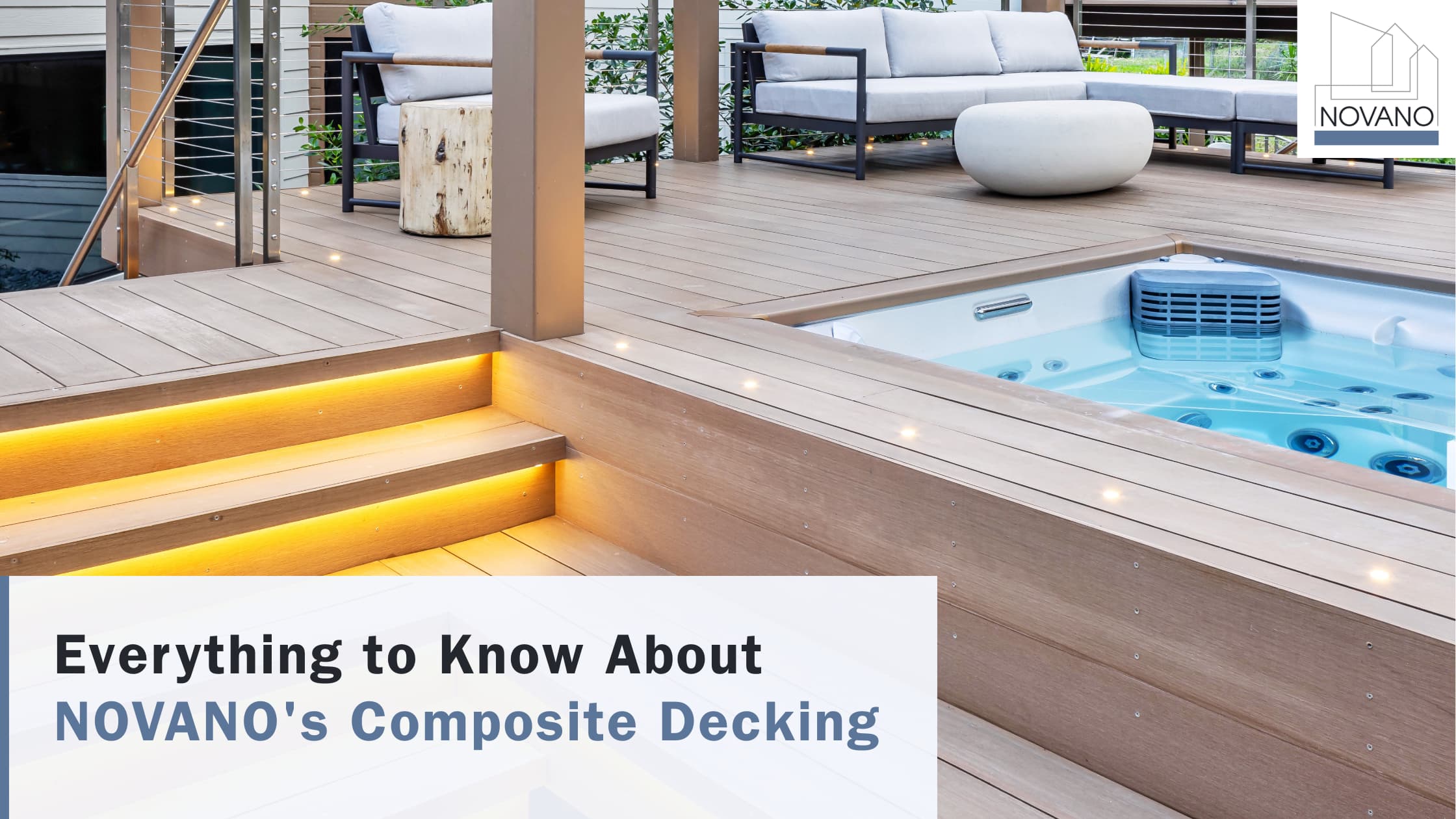
Decking materials have evolved significantly, moving beyond traditional wood to more advanced alternatives. Architects today prioritize not just aesthetics but also sustainability and durability in their designs. To meet these demands, newer materials need to be eco-friendly and maintenance-free while maintaining design flexibility.
Novano’s composite decking addresses these needs by combining innovative materials engineered with environmental consciousness in mind. It offers a forward-thinking choice designed for modern architectural projects seeking both long-term performance and a reduced carbon footprint. This guide explains why Novano is gaining attention as a future-ready decking material for architects.
✓ Novano’s composite deck merges sustainability, aesthetics, and engineering strength.
✓ It uses a hybrid composition with no traditional plastics yet remains fully recyclable.
✓ Architects gain long-lasting durability with very low maintenance demands.
✓ The material supports LEED and next-generation green building certifications.
Modern composites are changing how architects think about decking. Novano uses an engineered blend of agricultural byproducts and renewables to create a product that is both sustainable and performance-driven.
Material Composition:
Structurally, the boards are water-resistant, weather-resistant, and insect-resistant, making them suitable for all climates. With a Class A Fire Rating (ASTM E84), they also add safety assurance for residential, commercial, and hospitality projects. Architects can specify Novano decking with confidence, knowing that the material is built for long-term use and low lifecycle costs.
Traditional composites often rely on plastics to hold wood fibers together. Novano advances this approach with a new type of hybrid construction material that uses organic rice husks and renewable binders instead of plastics. The result is a decking board that is 100% wood-free and part of a circular economy.
By eliminating plastics, Novano decking reduces environmental impact while maintaining the resilience that architects expect. It is fully recyclable, making it ideal for projects where material reuse and long-term sustainability matter.
For architects specifying LEED-focused developments, Novano is not just an option but a strategic choice. It allows designers to combine environmental responsibility with high-performance building standards without compromise.
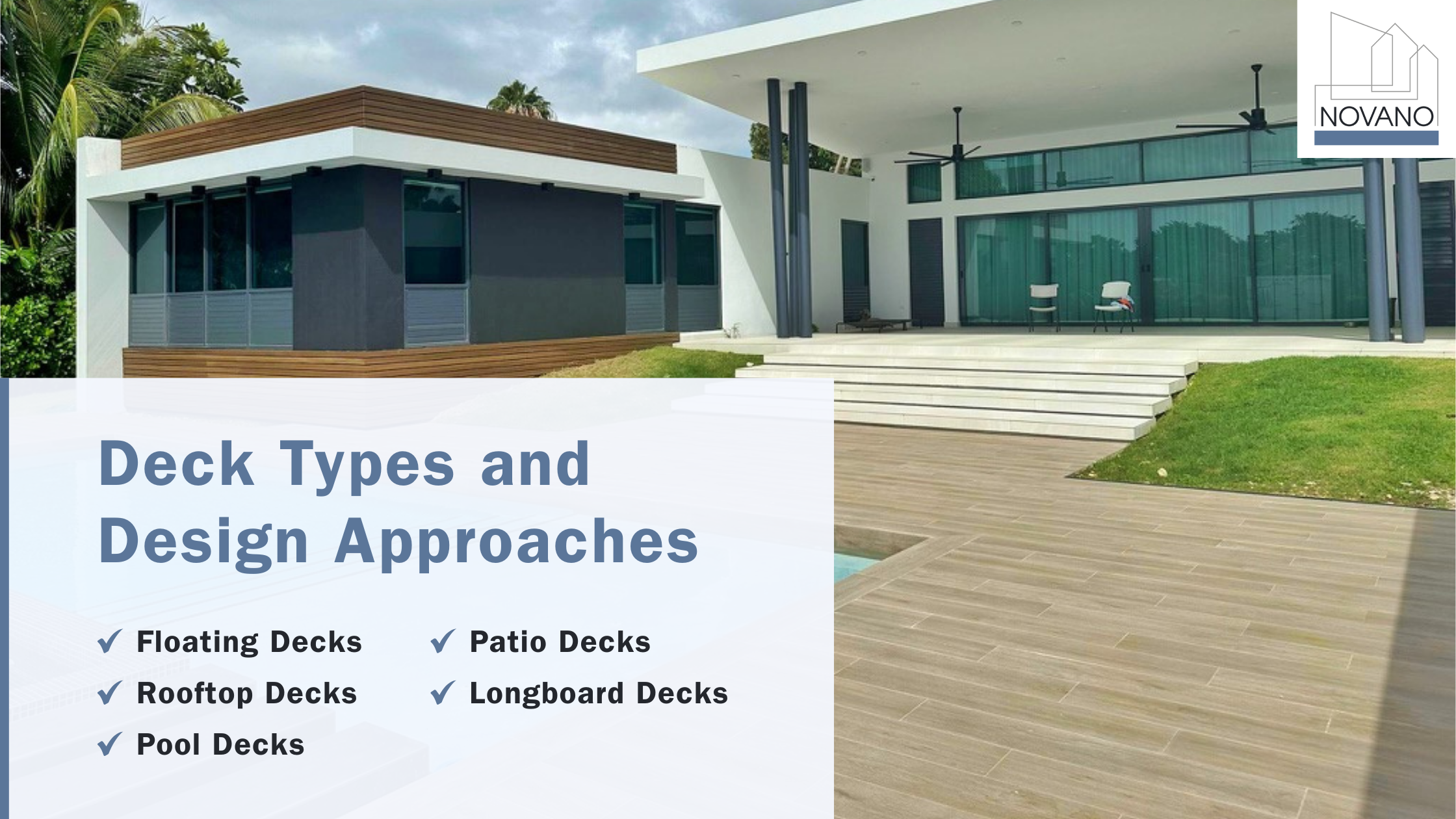
A floating deck rests directly on the ground or piers and is not attached to a building. This design minimizes site impact and is ideal for rentals or modular applications.
Key considerations:
Rooftop decks maximize space in urban environments but require careful structural and waterproofing design.
Key considerations:
Designing pool decks focuses on water drainage, slip resistance, and heat tolerance.
Key considerations:
Raised or flush patios connect indoor and outdoor living areas. Coordination with adjacent hardscape materials like concrete or pavers is crucial for aesthetic continuity.
Key considerations:
Longboards extend linearly along property lines or scenic views. Design challenges include expansion management and structural support for longer spans.
Key considerations
Choosing the right material ensures beauty and performance over decades.
NOVANO Building Products USA offers hybrid composite decking that combines sustainability, Class A fire rating, and high-end design, perfect for residential, commercial, and hospitality builds.

✓ Resistant to UV, water, and mold
✓ Resistant to moisture, rot, and insect damage
✓ Designed to withstand extreme climates (from humid coastal regions to cold climate regions)
✓ Long lifespan with minimal lifecycle costs
✓ Does NOT require regular painting or sealing
✓ Class A fire-rated
✓ Does NOT splinter, crack, or warp
✓ Made from recycled, renewable resources
✓ Fully recyclable at the end of its lifecycle
✓ Meets global sustainability benchmarks, including LEED
✓ Mimics the natural warmth of wood without its weaknesses
✓ Available in a palette of modern finishes and colors
Novano composite decking delivers strong ROI through minimal maintenance and a long lifespan. Over time, it proves both economical and environmentally responsible. Every board is backed by a 25-year warranty on material and a 5-year warranty on the finish for decking, providing added assurance of lasting performance.
Installation is straightforward when best practices are followed. Architects and contractors can rely on Novano’s technical guides to simplify the process.
✓ Maintain proper spacing and allow airflow for natural expansion.
✓ Ensure substructure alignment for uniform aesthetics.
✓ Always store materials flat, covered, and in a dry, ventilated area before installation.
✓ Use starter clips for secure board placement.
Once installed, Novano decking requires very little care compared to traditional wood. The boards maintain their finish and structural strength with minimal effort.
✓ Clean regularly with warm water, mild dish soap, and a soft-bristle brush
✓ Rinse with a garden hose to remove dirt and debris
✓ Treat stains (oil, grease, hard water, or mildew) promptly with gentle cleaning methods such as soapy water or diluted vinegar
✓ All products are fully recyclable: never burn, and always dispose responsibly
For more details, explore Novano’s care and cleaning resources to help keep every project looking its best.
NOVANO composite decking is designed for architects who want to balance sustainability, aesthetics, and engineering strength in their projects. Its hybrid, recyclable composition meets rising environmental standards while delivering a natural look and long-term durability.
Get FREE Samples today and experience the quality, texture, and craftsmanship of Novano decking for yourself, or Shop Now to start your next project!

It is wood-free, fully recyclable, and engineered to resist water, rot, insects, and UV rays, unlike natural wood that requires constant upkeep.
Novano blends recycled rice husks with biobased renewables, creating a strong board without relying on traditional plastics.
Yes. Its recyclable, sustainable composition supports green building certifications and eco-focused specifications.
Error: Contact form not found.