
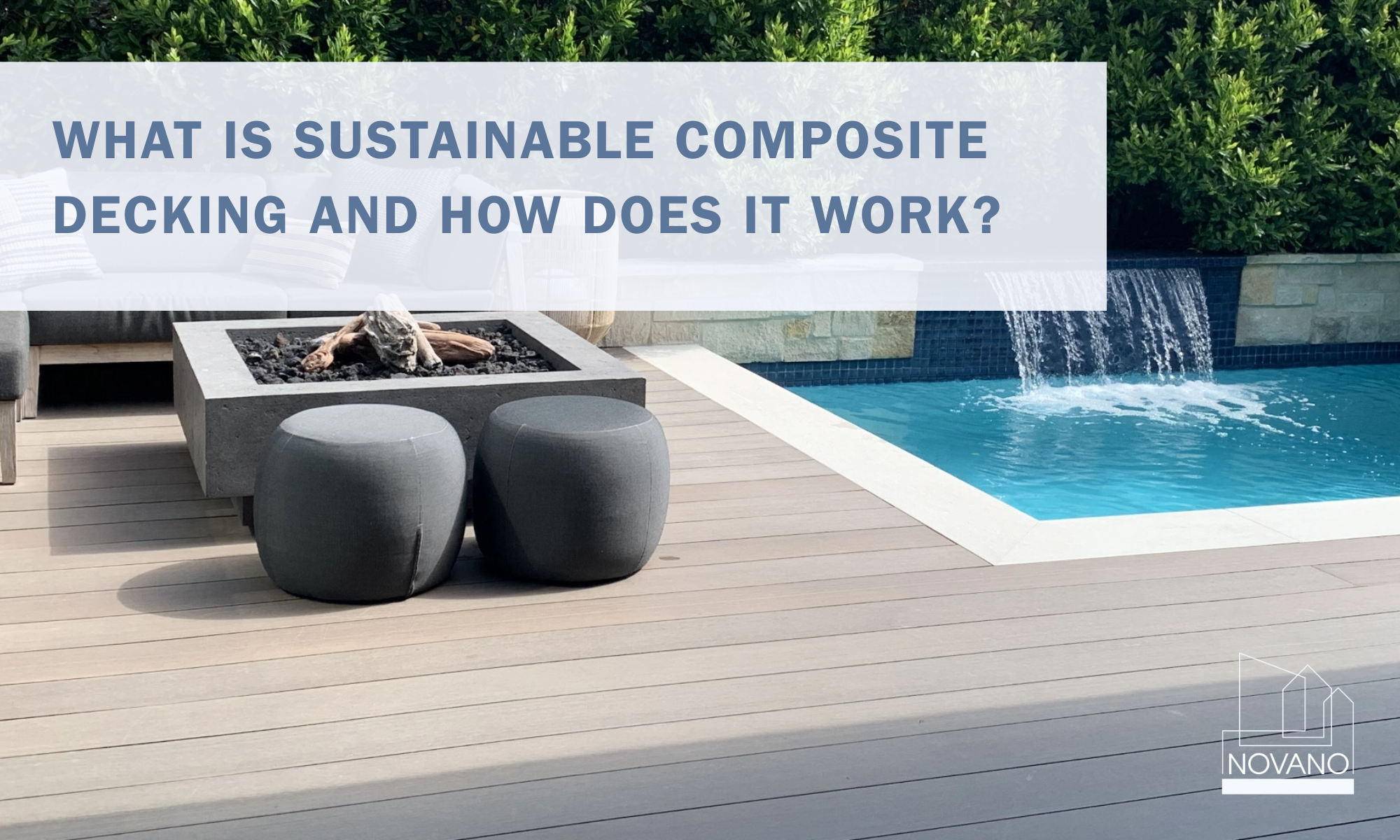
Sustainable composite decking uses recycled and bio-based materials to deliver durable, low-maintenance, eco-friendly outdoor spaces. Explore its benefits, performance, certifications, and how NOVANO Building Products USA leads in sustainable solutions.
Outdoor living is evolving. Today’s architects, builders, and homeowners are seeking materials that combine style, strength, and sustainability. Sustainable composite decking answers this call, delivering beautiful, long-lasting decks made from recycled and renewable resources. As environmental awareness grows, so does the demand for products that minimize impact without sacrificing performance or design. This article explores what makes composite decking sustainable, how it works, and why it’s reshaping outdoor construction across America and globally.
Sustainable composite decking is an advanced building material crafted from recycled agricultural waste, reclaimed wood fibers, bio-based ingredients, or other environmentally responsible components. This advanced material category goes beyond traditional composite decking by emphasizing renewable content, reduced environmental impact, and enhanced longevity.
The fundamental distinction lies in material sourcing and composition. Traditional wood decking relies on harvested timber, often requiring chemical treatments for durability. Standard composite decking typically combines wood fibers with plastic polymers, offering some recycled content but limited sustainability benefits. While sustainable composite decking utilizes agricultural byproducts like rice husks, wheat straw, or bamboo fibers combined with bio-based or recycled polymers.
This material category includes both capped and uncapped configurations. Capped composite boards feature a protective polymer shell surrounding the core material, providing enhanced moisture resistance and color retention. Uncapped boards rely on the inherent properties of the composite mixture for performance. The capping technology significantly extends product lifespan while maintaining the sustainable benefits of the core material.
Sustainable composite decking is defined by its resourceful use of materials:
✓ Recycled Content: Boards often include agricultural byproducts like rice husks, sawdust, or wheat straw. This diverts significant waste from landfills and reduces reliance on virgin resources.
✓ Binders and Stabilizers: Advanced polymers act as binding agents, while UV inhibitors and bonding agents ensure long-term color retention and structural integrity.
✓ Bio-Based and Wood-Free Options: Some formulations are entirely wood-free, using renewable plant-based polymers for maximum sustainability and resistance to rot or insect damage.
Sustainable composite decking is engineered for exceptional slip resistance and impressive impact tolerance. Its dense, uniform structure resists warping, splintering, and cracking, even under heavy use or extreme weather.
Thanks to advanced UV stability, these boards retain their color and resist fading. The water-resistant composition prevents rot, mold, and insect infestations which are common issues with traditional wood. This resilience makes composite decking ideal for humid, coastal, or freeze-thaw climates.
Composite decking typically lasts 25-30 years or more, outpacing wood in durability and reducing the need for replacements. Minimal maintenance, just occasional cleaning, means lower lifetime costs and less environmental impact from chemical treatments or repairs.
Sustainable composite decking addresses multiple environmental challenges through its innovative material approach. The utilization of agricultural waste reduces the demand for virgin timber harvesting, helping preserve forest ecosystems and biodiversity. This approach also diverts organic waste from landfills, where it would otherwise contribute to methane emissions. It offers measurable benefits such as:
✓ Reduced Deforestation: No trees are felled for production; recycled wood or plant fibers are used instead.
✓ Lower Embodied Carbon: Manufacturing processes use less energy and create fewer emissions than producing tropical hardwood or vinyl decking.
✓ No Chemical Treatments: Composite boards don’t require sealants or pressure treatments, keeping harmful chemicals out of the environment.
✓ Supports LEED, ESG, and Green Building: Choosing composite decking helps meet sustainability goals and can contribute to green building certifications.
LEED (Leadership in Energy and Environmental Design) and ESG (Environmental, Social, Governance) standards are shaping the future of construction. Sustainable composite decking can contribute to LEED credits in categories like Materials & Resources, Innovation, and Sustainable Sites, supporting project teams in achieving certification for both residential and commercial builds.
These products also align with ESG goals by reducing waste, conserving resources, and minimizing environmental risk, making them a smart choice for forward-thinking architects and municipalities.
Natural wood decking, including pressure-treated lumber, cedar, and tropical hardwoods, requires significant ongoing maintenance and environmental resources. Pressure-treated wood involves chemical treatments that raise environmental and health concerns. Cedar and tropical hardwoods, while naturally resistant to decay, contribute to deforestation and often require international transportation.
Feature | Sustainable Composite | Natural Wood | PVC/Vinyl |
Resource Use | Recycled/Bio-based | Virgin timber | Petroleum-based |
Maintenance | Low | High (sealing, staining) | Low |
Durability | 25-30+ years | 10-15 years | 20-25 years |
Environmental Impact | Low (no deforestation) | High (deforestation) | Moderate (plastics) |
Safety | No splinters and Non-toxic | Splinters and Uses chemicals | Can get hot and Plastic feel |
Composite decking stands out for its sustainability, long-term cost savings, and minimal upkeep compared to traditional wood or plastic-based alternatives. The material’s superior durability and consistent performance characteristics make it an ideal choice for projects requiring long-term value and environmental responsibility.
Natural composite decking is engineered to last 25 to 30 years or more, making it one of the most durable outdoor surface materials available. Unlike wood, which may splinter, rot, or require annual maintenance, composite boards maintain their structure, color, and texture over decades with minimal upkeep.
Composite decking resists moisture, rot, insects, and UV damage, key reasons it outperforms wood. Its durable core and protective surface layer prevent warping, fading, and splintering over time, even in harsh climates.
✓ Climate Exposure: High heat, humidity, or salt air can affect performance.
✓ Installation Quality: Proper spacing and support extend longevity.
✓ Material Quality: Boards made with stronger composites (like rice husks) last longer.
✓ Usage & Traffic Levels: Light residential use lasts longer than high-traffic commercial applications.

Sustainable composite decking is specifically engineered to create a safe, comfortable, and worry-free environment for families and their furry friends. Here’s an in-depth look at why composite decking stands out as a secure choice for homes, schools, and public spaces:
✓ Splinter-Free Surface: Composite decking boards are manufactured with a smooth, uniform finish, eliminating the risk of painful splinters that are common with natural wood. This means children can play barefoot and pets can roam freely without injury concerns.
✓ Non-Toxic Materials: High-quality composite decking is made without harmful chemical treatments, heavy metals, or volatile organic compounds (VOCs). This ensures that surfaces are safe for direct contact and that pets or children aren’t exposed to toxins through touch or accidental ingestion.
✓ Slip-Resistant Texture: Many composite decking products feature textured surfaces or specialized coatings that provide excellent traction, even when wet. This reduces the risk of slips and falls for running children and active pets, making it ideal for pool decks and play areas.
✓ No Harmful Runoff: Unlike pressure-treated wood, composite decking does not leach chemicals into the surrounding soil or water. This protects gardens, lawns, and nearby ecosystems, ensuring a healthier outdoor environment for families and wildlife.
✓ Resistant to Mold, Mildew, and Insects: The moisture-resistant properties of composite decking prevent the growth of mold and mildew, which can trigger allergies or respiratory issues in children and pets. Additionally, its dense structure deters insects like termites, reducing the risk of bites and stings.
✓ Thermal Stability and Comfort: Advanced composite decking is designed to resist excessive heat buildup, staying cooler underfoot compared to many traditional materials. This makes it more comfortable for kids and pets during hot summer days and reduces the risk of burns.
✓ Easy to Clean and Maintain: Composite decking requires only simple cleaning with soap and water to remove spills, dirt, or pet accidents. Its stain resistance means fewer worries about lasting marks from food, drinks, or pet waste, supporting a hygienic play space.
NOVANO Building Products USA delivers a next-generation composite decking line engineered for sustainability and performance:
✓ Materials: Made from recycled rice husks and renewable polymers, the boards are 100% wood-free, reducing pressure on forests and maximizing durability.
✓ Performance: With a Class A fire rating, superior UV and moisture resistance, and minimal required maintenance, Novano’s decking stands up to America’s toughest climates.
✓ Design Flexibility: Modern finishes and a various color palette suit any architectural style.
✓ Professional Support: Comprehensive specs, guides, and samples help streamline project planning.
✓ Sustainability: Novano’s solutions align with LEED and long-term green building objectives, making them a top choice for future-focused projects.
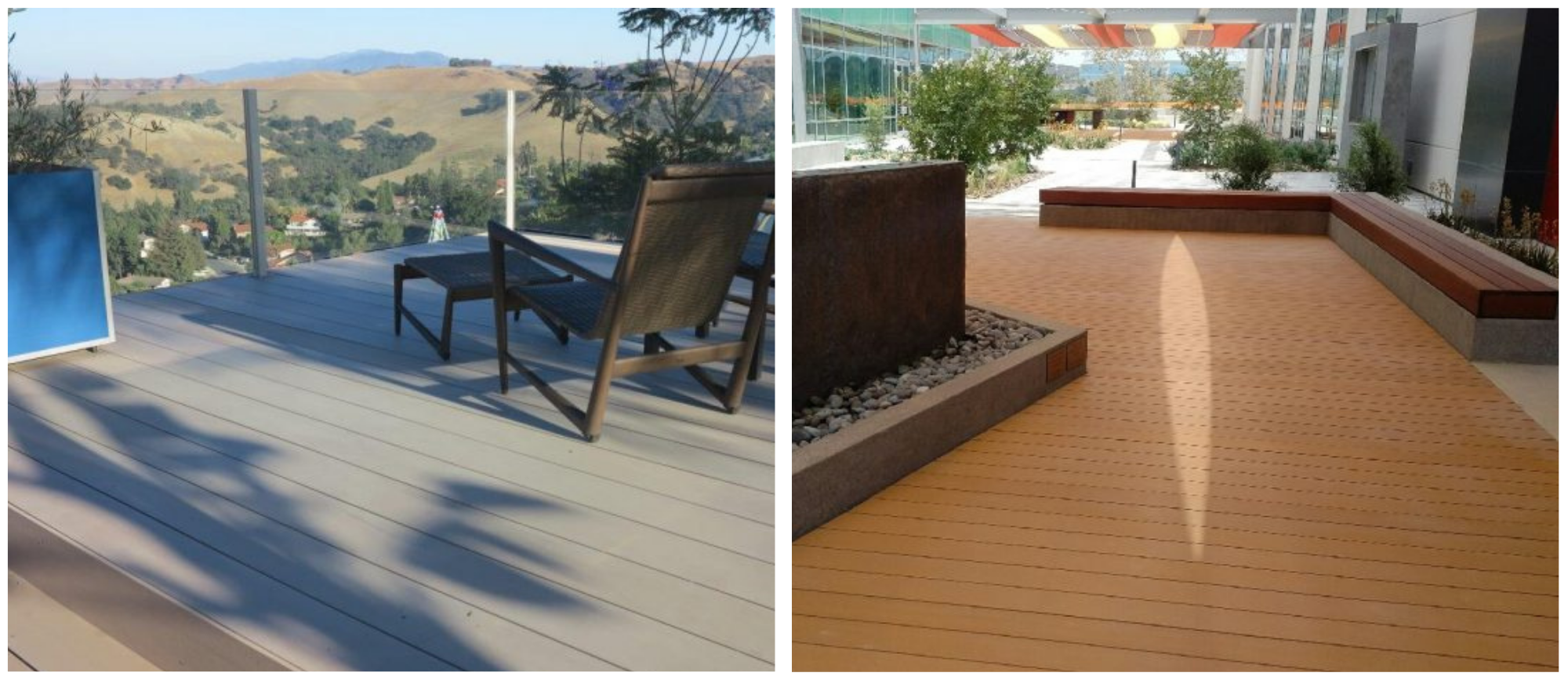
This sophisticated rooftop installation showcases the decking’s versatility in contemporary design. The warm wood-tone planks create seamless integration with modern furniture, demonstrating how sustainable materials can enhance luxury outdoor living spaces. The project’s elevated location required lightweight materials that could withstand constant UV exposure while maintaining consistent color and texture.
This expansive commercial terrace features sustainable composite decking that delivers both aesthetic appeal and practical performance. The rich, natural wood appearance complements the building’s modern architecture while providing a durable surface for high-traffic use. The installation demonstrates how sustainable materials can create inviting outdoor spaces that support employee well-being and corporate sustainability goals.
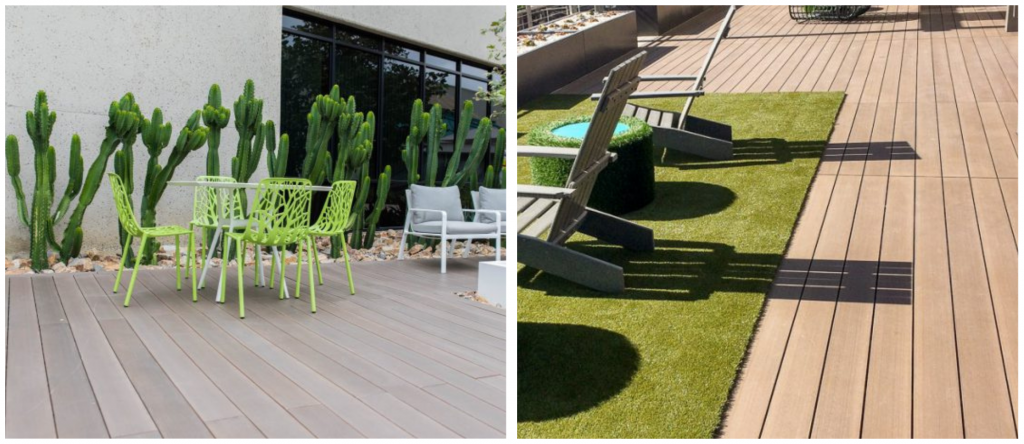
This sleek residential installation pairs sustainable decking with modern landscaping to create an outdoor entertainment area that requires minimal maintenance. The material’s consistent grain pattern and natural color tone provide an elegant backdrop for contemporary furniture and desert landscaping. The project showcases how sustainable decking can enhance property value while supporting water-wise landscape design.
This scenic hillside installation demonstrates sustainable decking’s ability to create intimate outdoor spaces with stunning views. The material’s dimensional stability ensures consistent performance despite temperature variations and exposure to California’s intense sun. The project highlights how sustainable materials can provide long-term durability while maintaining the natural aesthetics that complement outdoor living and scenic environments.
Sustainable composite decking is more than a trend, it’s a responsible, high-performance solution for modern outdoor spaces. By choosing materials that conserve resources, last longer, and require less maintenance, builders and homeowners create value for generations.
NOVANO Building Products USA empowers you to build smarter, greener, and more beautifully. Explore NOVANO’s composite decking solutions for your next project and experience the future of outdoor living, you can now browse and shop directly online.
Composite decking is sustainable because it uses recycled plastics and reclaimed wood or bio-based materials, reducing landfill waste and conserving natural resources.
Unlike wood, sustainable composite decking doesn’t require tree harvesting, chemical treatments, or frequent replacement, and it offers superior durability and lower maintenance.
Eco-friendly decking is made from recycled plastics, agricultural byproducts (like rice husks), and renewable plant-based polymers, often with advanced UV and moisture-resistant additives.
Yes, composite decking can last 25-30 years or more, outlasting traditional wood by a decade or longer, with less risk of rot, splintering, or insect damage.
Sustainable decking is non-toxic, splinter-free, and slip-resistant, providing a safe surface for families and pets. It also avoids harmful chemical runoff, protecting surrounding ecosystems.
Error: Contact form not found.